New York Climate Week: Who's Paying?
At this New York Climate Week in 2026, the question was less “How can we do it?” and more “How can we do it so it helps us achieve our core business objectives: increase revenue, reduce cost, reduce risk.”
Not because the climate imperative has weakened. Because the people trying to act are being asked harder questions: Where does this sit in our business? Who pays? What can we measure? And can we deliver it at a price that makes sense?
A few themes I’ve taken home:
1. Climate interventions are getting much more specific. In buyer conversations, generic recommendations to ‘reduce and remove’ repeatedly gave way to questions about impact on water, energy, particular commodities, sourcing regions, facilities and communities. The useful answer is not simply “invest in regenerative agriculture” or “buy removals.” It is: which intervention, connected to which part of your business, in which place will make the greatest long term impact on your business?
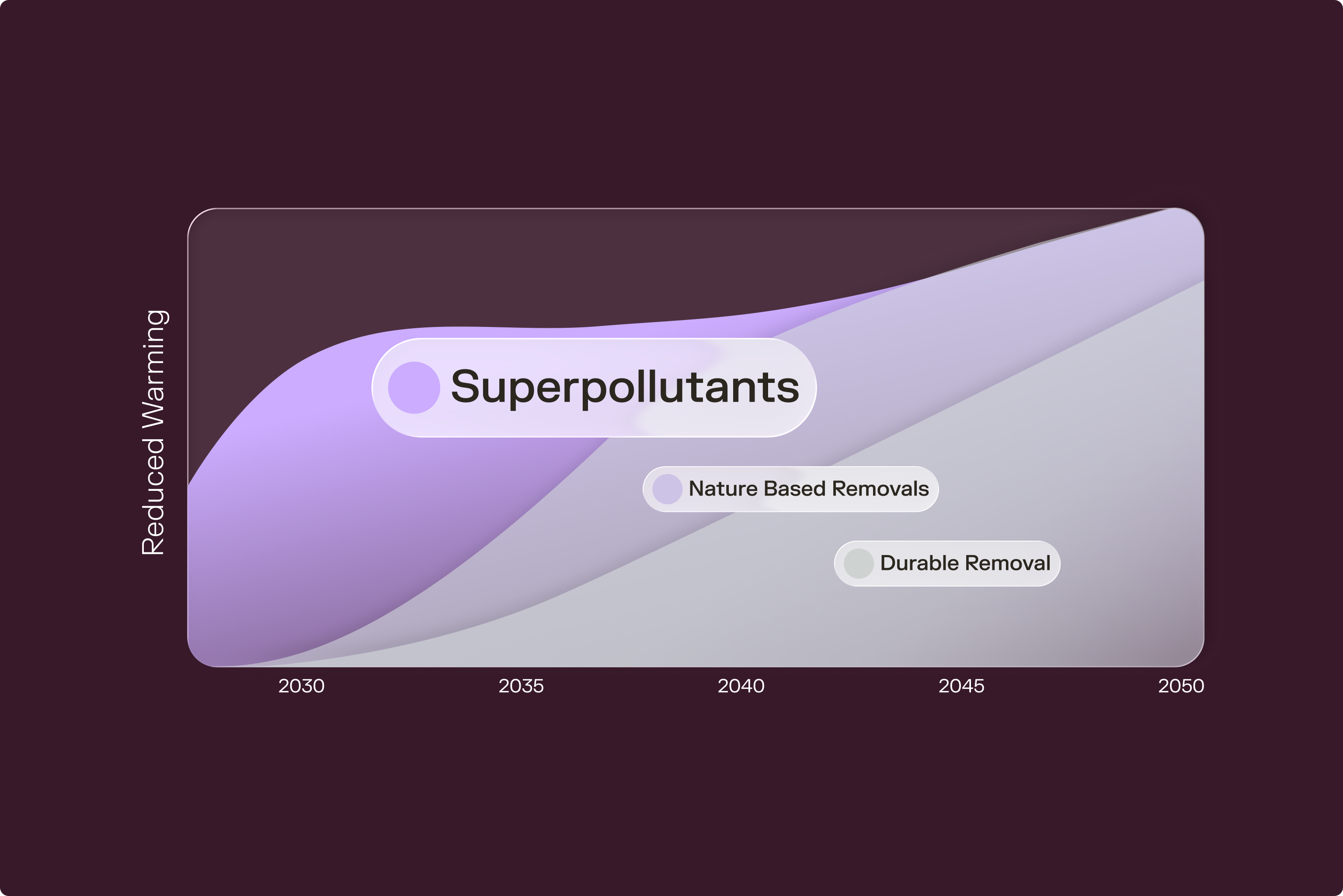
2. The Now, Nature, Next portfolios. Superpollutant destruction was the belle of the climate ball, not least thanks to the exciting Google & Terradot deal which stacks superpollutant and ERW credits, and to two $100M+ buying coalitions launched during the week. Few buyers focus exclusively on superpollutants - their immediate impact on the atmosphere pairs beautifully with investments in nature and in high durability innovative carbon removal methods (Now, Nature, Next).
3. Nature is critical infrastructure, and resilience is the business case. Nature underpins over 60% of global GDP so it’s no surprise that many sessions focused on nature protection, tourism, livelihoods and asset risk alongside carbon. In other conversations, we discussed whether investment in a supply chain or landscape could also reduce exposure to disruption or rising insurance costs. Those financial benefits need to be demonstrated, not assumed - but they change the conversation a sustainability lead can have with a CFO.
4. Delivery risk is a growing concern. Following many portfolio delays, buyers are increasingly concerned about deliverability of their credits to be able to make valid claims. Active risk monitoring, replacement rights and insurance are becoming table stakes for sophisticated buyers.
5. Good projects still need the right financial architecture. Many projects need pre-development funding long before they are bankable. Carbon finance conversations continuously raise the difficulty of financing individual deals that are too small, and the value of aggregation, insurance and structures that allocate delivery risk. Capital matters; so does matching it to the right stage and risk.
6. Cost-consciousness is not just a race to the cheapest tonne. Buyers - and their finance teams - are incredibly cost conscious but weighing price against deliverability, scientific confidence, relevance to their operations and benefits beyond carbon. Bulk and secondary market buyers can achieve discounts, but at what point does this undermine the quality and deliverability? What makes the price right and the direction of pricing in the market remain very hot topics.
The next phase of corporate climate action will be precisely about joining these pieces up: science that identifies the right climate interventions; data that connects it to a real place and business; finance that gets the project built; and a commercial case strong enough to survive scrutiny and deliver results.
In recent months, we’ve done exactly that for a few clients in food, agriculture and pharma. We’d love to hear from you and swap notes - get in touch with the team: hello@cur8.earth.
.jpg)
October 1, 2026
.png)